
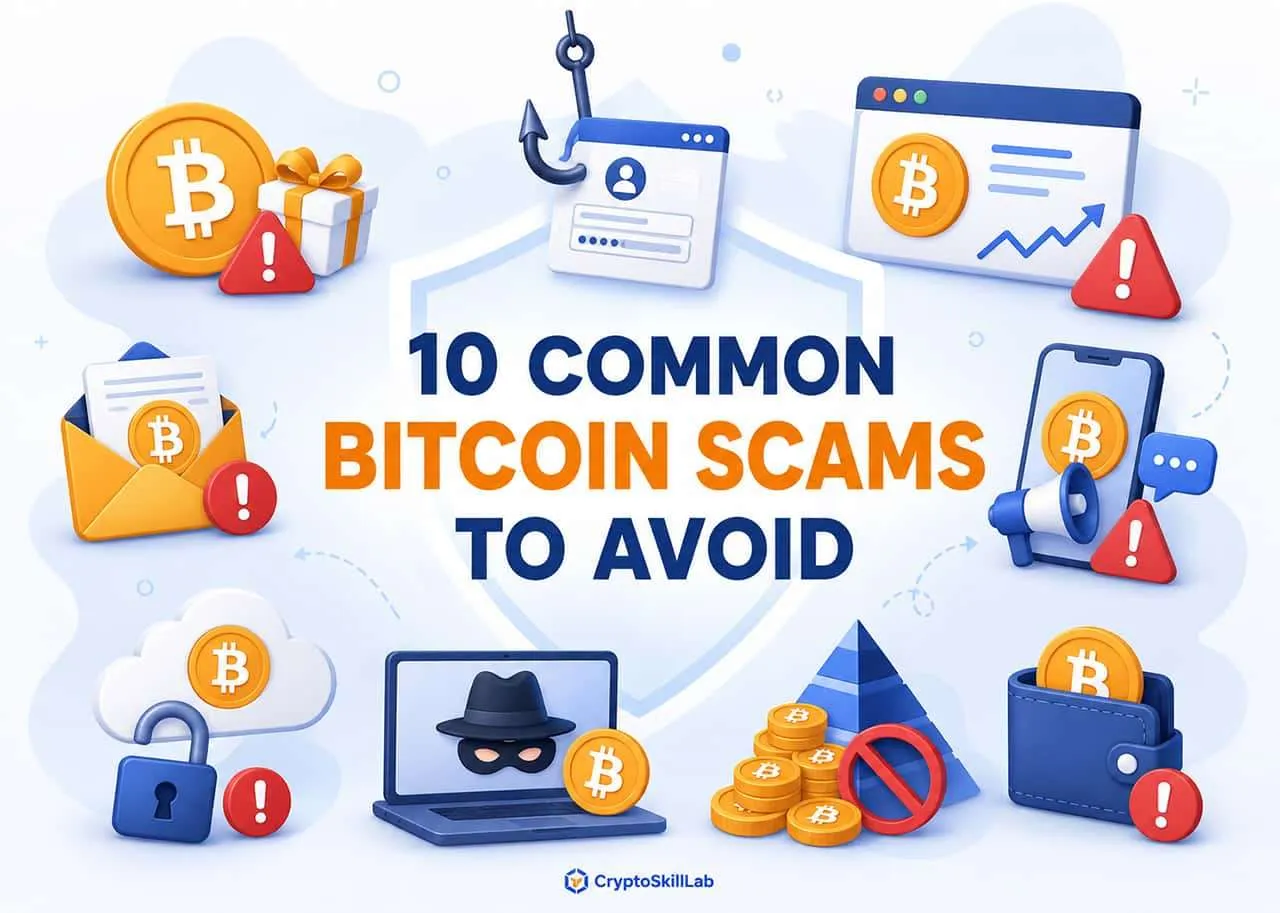
10 Common Bitcoin Scams to Avoid
If you are just getting into crypto, one of the first things you should understand is bitcoin scams to avoid. Bitcoin itself is not a scam, but because it is digital and fast-moving, scammers often try to take advantage of beginners.
This guide breaks down the 10 common Bitcoin scams to avoid in a simple, human way so you can recognize them early and protect your funds.
To understand Bitcoin better, you may also want to learn about what is crypto, what is Bitcoin, and what is blockchain and how it works.
Why Bitcoin Scams Happen
Crypto transactions cannot be reversed once sent. That means if someone tricks you, it is very hard to recover your money. This is why learning bitcoin scams to avoid is important before investing or sending any crypto.
Most scams rely on trust, urgency, or unrealistic promises. If something feels rushed or too good to be true, it usually is.
10 Common Bitcoin Scams to Avoid
1. Fake Investment Platforms
These websites promise high or guaranteed profits. At first, they may even show fake earnings to gain trust.
Example: A site promises to double your Bitcoin in 7 days. You deposit funds, see fake profits, but cannot withdraw anything later.
2. Phishing Websites
Phishing scams copy real crypto websites to steal your login details.
Example: You receive a fake email from “Binance support” asking you to verify your account. The link steals your password.
3. Fake Wallet Apps
These apps look real but are designed to steal your recovery phrase.
Example: You install a fake wallet app, enter your seed phrase, and your crypto disappears instantly.
4. Giveaway Scams
Scammers promise free Bitcoin if you send a small amount first.
Example: A video claims “send 0.01 BTC and get 0.1 BTC back.” After sending, you receive nothing.
5. Pump and Dump Schemes
A group artificially increases a coin’s price and then sells it suddenly.
Example: A Telegram group tells everyone to buy a coin. Price rises, then crashes after insiders sell.
6. Fake Airdrops
Scammers offer free tokens but require wallet connection or permissions.
Example: A fake airdrop site asks you to connect your wallet, then drains your funds.
Knowing the difference between legitimate crypto rewards and scam offers is an important security skill for beginners. Explore the Crypto Reward Systems Sandbox to learn how reward systems work in practice.
7. Impersonation Scams
Scammers pretend to be support teams or influencers.
Example: Someone messages you claiming to be “Bitcoin Support” and asks for your private key.
8. Ponzi Schemes
 Early users are paid using money from new users instead of real profits.
Example: A platform promises 20% monthly returns but collapses when new investors stop joining.
9. Fake Mining Sites
These sites claim you can earn Bitcoin through cloud mining but often do nothing.
Example: You pay a “mining fee” but never receive any mining rewards.
10. Social Media Scams
Fake accounts promote Bitcoin offers or giveaways.
Example: A fake X account posts a Bitcoin giveaway asking you to send crypto first.
Quick Red Flags Checklist for Bitcoin Scams
Here is a simple way to remember bitcoin scams to avoid. If you see any of these signs, stop immediately and double-check.
- If someone promises guaranteed profits, it is a red flag.
Example: “Invest $100 today and earn $500 in 3 days with zero risk.” - If you are asked to send crypto first to receive more later, be careful.
Example: “Send 0.01 BTC first, and we will send you 0.1 BTC back.” - If a website pressures you to act quickly, slow down.
Example: “Only 10 minutes left to claim this exclusive Bitcoin offer!” - If someone asks for your private key or recovery phrase, it is always a scam.
Example: “Send your seed phrase so we can verify your wallet.” - If it sounds too good to be true, it usually is.
Example: “Free Bitcoin giveaway from Elon Musk — just click and join.”
“Common Bitcoin scams include phishing websites, fake giveaways, impersonation schemes, and investment fraud designed to trick users into sending funds or revealing sensitive information.”
Trusted Learning Resources
For more information about crypto safety and blockchain basics, you can visit:
Final Thoughts
Understanding bitcoin scams to avoid is just as important as learning how Bitcoin works. Most scams can be avoided if you stay alert and take your time before making decisions.
By recognizing these 10 common Bitcoin scams to avoid, you can explore crypto more safely and confidently without falling into common traps.