
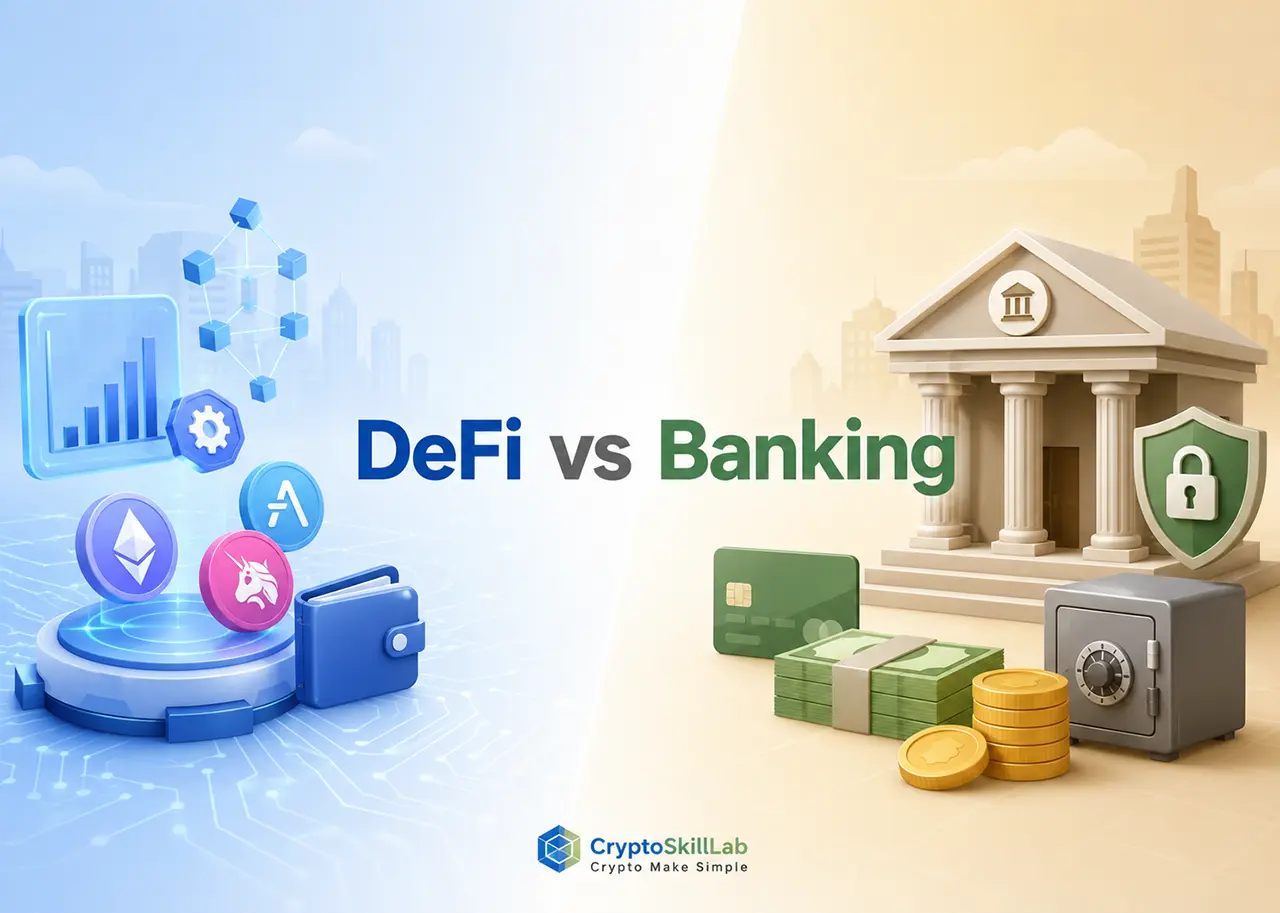
DeFi vs Banking: A Beginner’s Guide
The world of finance is changing quickly, and many people are starting to compare traditional banks with decentralized finance. Understanding defi vs banking can help beginners learn how money services work, how digital assets are used, and what makes these two financial systems different.
Traditional banking has been the standard way people save money, send payments, and access financial services for hundreds of years. DeFi introduces a different approach by using blockchain technology to provide financial services without relying on traditional financial institutions.
In this beginner’s guide, we will explain defi vs banking, how both systems work, their benefits and risks, and examples of how people use each option in everyday situations.
Table of Contents
- What Is DeFi?
- What Is Traditional Banking?
- How DeFi Works
- How Banking Works
- DeFi vs Banking: Key Differences
- Examples of DeFi and Banking Uses
- How Beginners Can Explore DeFi Safely
What Is DeFi?
DeFi, short for decentralized finance, is a financial system built using blockchain technology. Instead of depending on banks or other centralized companies, DeFi uses smart contracts and decentralized applications to provide services such as lending, borrowing, trading, and asset management.
To understand DeFi better, beginners should first learn how blockchain technology works because it is the foundation behind most decentralized applications. You can read more about it in our guide: What Is Blockchain and How It Works.
Unlike traditional banking, DeFi platforms are generally open to anyone with an internet connection and a compatible crypto wallet. Users can interact with financial applications directly without needing approval from a bank.
For example, someone using a DeFi lending platform may deposit cryptocurrency into a smart contract and allow other users to borrow those assets. The system automatically manages transactions according to predefined rules written in code.
What Is Traditional Banking?
Traditional banking is the financial system most people use today. Banks are centralized institutions that manage customer accounts, process payments, provide loans, and offer services such as savings accounts and credit cards.
When you deposit money into a bank account, the bank is responsible for managing those funds and providing access through services like online banking, ATMs, and payment networks.
Banks also follow government regulations and financial rules designed to protect customers and maintain stability within the financial system.
For example, when someone applies for a home loan, the bank reviews their income, credit history, and financial situation before deciding whether to approve the application.
How DeFi Works
Understanding how DeFi works is an important part of learning defi vs banking. DeFi relies on several key technologies that allow users to access financial services without traditional intermediaries.
1. Blockchain Networks
Most DeFi applications operate on blockchain networks. These networks record transactions publicly and allow applications to run without a central authority.
You can learn more about cryptocurrency fundamentals in our beginner guide: What Is Crypto.
2. Smart Contracts
Smart contracts are programs stored on a blockchain that automatically execute actions when specific conditions are met. They help DeFi platforms process transactions without requiring manual approval from a bank employee.
For example, a smart contract can automatically release borrowed funds after a user provides the required collateral.
3. Crypto Wallets
Users interact with DeFi applications through crypto wallets. These wallets allow people to manage digital assets and connect to decentralized applications.
Unlike a bank account, a crypto wallet is controlled by the user through private keys. This gives users more control but also means they are responsible for protecting their wallet information.
How Banking Works
Traditional banking works through centralized financial institutions. Banks maintain customer accounts, process transactions, and provide financial products under government regulations.
A typical banking process looks like this:
- A customer opens a bank account.
- The bank verifies the customer’s identity.
- The customer deposits money or receives payments.
- The bank manages transactions through its internal systems.
- The customer accesses services through branches, cards, or online banking.
This system provides convenience and security for millions of people worldwide. Banks also provide important services such as fraud protection, customer support, and financial advice.
DeFi vs Banking: Key Differences

The biggest difference in defi vs banking is how financial services are managed. Banks rely on centralized organizations, while DeFi uses blockchain networks and smart contracts.
| Feature | DeFi | Banking |
|---|---|---|
| Control | Users manage their assets through blockchain applications. | Banks manage accounts and financial services. |
| Access | Usually requires an internet connection and crypto wallet. | Requires account registration and banking services. |
| Technology | Uses blockchain networks and smart contracts. | Uses traditional financial systems and databases. |
| Transactions | Processed through blockchain networks. | Processed through banking networks. |
| Customer Support | Usually depends on community support or platform resources. | Provides customer service teams and financial assistance. |
| Regulation | Rules depend on the platform and local regulations. | Operates under banking laws and financial regulations. |
| Security | Users are responsible for wallet and private key security. | Banks provide account protection and security systems. |
Examples of DeFi and Banking in Real Life
Looking at real-world examples makes defi vs banking easier to understand.
Example 1: Saving Money
A person using a bank may place money into a savings account and receive interest based on the bank’s rates.
A DeFi user may provide digital assets to a decentralized lending platform and receive rewards based on market activity.
Example 2: Sending Money
A traditional bank transfer may require account details, processing times, and possible fees.
A cryptocurrency transaction can be sent directly between wallets using blockchain technology. Bitcoin is one example of a digital currency that introduced a new way of transferring value. Learn more here: What Is Bitcoin.
Example 3: Borrowing Funds
A bank usually checks credit history and income before approving a loan.
Some DeFi platforms allow users to borrow by providing cryptocurrency as collateral instead of going through a traditional credit approval process.
Advantages of DeFi
When comparing defi vs banking, DeFi offers several features that attract users who want more control over their financial activities. However, these benefits also come with responsibilities and risks.
1. Greater Accessibility
One of the main advantages of DeFi is that many services can be accessed by anyone with an internet connection and a compatible crypto wallet. Users do not always need a traditional bank account or approval from a financial institution.
For example, someone living in an area with limited banking services may still be able to access certain financial tools through decentralized applications.
2. More User Control
DeFi allows users to manage their own digital assets. Instead of depositing funds into a bank account controlled by a financial institution, users interact directly with blockchain applications.
This approach gives users more control over their assets, but it also means they must take responsibility for security practices such as protecting private keys and using trusted platforms.
3. Transparent Transactions
Blockchain networks record transactions publicly, allowing users to verify activity on the network. This transparency is one of the reasons many people are interested in learning about defi vs banking.
Users can often view transaction records through blockchain explorers and confirm activity without relying only on a company’s internal records.
Advantages of Traditional Banking
Although DeFi is growing, traditional banking remains an important part of the global financial system. When comparing defi vs banking, banks still provide several advantages.
1. Customer Protection
Banks operate under financial regulations designed to protect customers. Many banks provide services such as fraud monitoring, account recovery assistance, and customer support.
2. Easy Everyday Use
Most people already use banking services for daily activities such as paying bills, receiving salaries, using debit cards, and managing household expenses.
3. Professional Support
Traditional banks provide access to customer service teams and financial professionals who can help customers with account issues, loans, and other financial products.
Risks of DeFi
Understanding the risks is an important part of learning defi vs banking. While DeFi provides new opportunities, beginners should understand that it is not risk-free.
Smart Contract Risks
DeFi applications depend on smart contracts. If there are coding errors or security issues, users may experience losses.
Market Volatility
Many DeFi services involve cryptocurrency assets, which can experience significant price changes. Users should understand market risks before using any platform.
Security Responsibility
In DeFi, users are usually responsible for protecting their own wallets, passwords, and private keys. Losing access information can result in permanent loss of funds.
For additional information about blockchain security practices, you can also review resources from trusted organizations such as: Ethereum’s DeFi educational resources.
Risks of Traditional Banking
Traditional banking also has limitations that are important to consider when discussing defi vs banking.
Account Restrictions
Banks may require identity verification, account approval, and documentation before providing services.
Fees and Processing Times
Some banking services may include transaction fees, international transfer costs, or waiting periods depending on the service and location.
Centralized Control
Banks control their own systems and policies. Customers depend on the institution for account access, transaction processing, and service availability.
How Beginners Can Explore DeFi Safely
If you are new to DeFi, learning the basics before using any platform is important. The following steps can help beginners understand defi vs banking while reducing common mistakes.
Step 1: Learn Crypto Basics
Before exploring DeFi applications, understand basic cryptocurrency concepts such as wallets, blockchain networks, and digital assets.
Step 2: Create a Secure Crypto Wallet
Choose a reputable wallet provider and learn how to securely store your recovery phrase. Never share your private keys or recovery phrase with anyone.
Step 3: Start With Small Amounts
Beginners should avoid using large amounts while learning. Start with small transactions to understand how transfers, fees, and applications work.
Step 4: Research Platforms Carefully
Before connecting a wallet to a DeFi application, check the project’s reputation, security information, and community feedback.
The official resources from organizations such as: Investor.gov crypto asset information can also help beginners understand digital asset risks.
DeFi vs Banking: Which One Should Beginners Choose?
The answer depends on individual needs. There is no single option that is perfect for everyone.
Traditional banking may be better for people who want familiar services, customer support, and regulated financial products. DeFi may appeal to users who want direct control of digital assets and access to blockchain-based financial tools.
Many people may use both systems together. For example, someone may use a bank account for everyday expenses while exploring DeFi applications to learn more about blockchain technology.
Common Mistakes Beginners Should Avoid
- Connecting a wallet to unknown websites.
- Sharing private keys or recovery phrases.
- Investing without understanding how a platform works.
- Ignoring transaction fees and network costs.
- Following unrealistic promises of guaranteed returns.
Frequently Asked Questions About DeFi vs Banking
Is DeFi replacing banks?
DeFi is creating new financial options, but it is unlikely to completely replace traditional banking in the near future. Banks continue to provide important services such as loans, payments, and financial support.
Is DeFi safer than banking?
Safety depends on how each system is used. Banks provide regulated services and customer support, while DeFi gives users more control but requires stronger personal security practices.
Can beginners use DeFi?
Yes, beginners can learn about DeFi, but they should start by understanding blockchain, wallets, and security basics before using real funds.
Conclusion
Understanding defi vs banking helps beginners see how traditional financial systems and blockchain-based services compare. Banking offers familiarity, regulation, and customer support, while DeFi introduces new ways to access financial tools through decentralized technology.
Neither system is perfect. The best choice depends on your goals, knowledge, and comfort level with technology. By learning the basics and practicing good security habits, beginners can make more informed decisions about the financial tools they choose.
More Real-World Examples of DeFi vs Banking
Seeing practical examples makes defi vs banking easier to understand. Both systems solve similar financial needs, but they use different methods to provide services.
Example 4: Earning Interest on Savings
A person using traditional banking may deposit $1,000 into a savings account. The bank uses those deposits as part of its financial operations and pays the customer interest based on the bank’s current rates.
In DeFi, a user may deposit cryptocurrency into a decentralized lending platform. Other users may borrow those assets, and the depositor may receive rewards according to the platform’s rules and market conditions.
Example: Alice keeps her emergency money in a bank savings account for stability, while she uses a small amount of cryptocurrency to explore DeFi lending and learn how decentralized applications work.
Example 5: Sending Money Internationally
Traditional banks can send money internationally, but transfers may involve multiple financial institutions, exchange rates, and processing times.
With DeFi and blockchain-based payments, users can send digital assets directly to another wallet without using traditional banking networks. However, users still need to consider transaction fees, network conditions, and security.
Example: Bob wants to send money to a friend in another country. A bank transfer may require account details and several business days, while a cryptocurrency transfer may be completed through a blockchain network within minutes.
Example 6: Borrowing Money
In traditional banking, someone applying for a personal loan usually needs to provide identification, income information, and credit history. The bank evaluates the application before approving the loan.
In DeFi, some lending platforms allow users to borrow funds by locking cryptocurrency as collateral. The process is managed by smart contracts instead of a bank employee.
Example: Carol owns cryptocurrency and needs temporary funds. Instead of selling her assets, she uses a DeFi lending platform where she provides collateral and borrows another digital asset.
Example 7: Buying and Trading Assets
Traditional investors usually use banks, brokers, or financial platforms to buy and sell assets. These services often require user accounts and follow specific operating rules.
DeFi users can access decentralized exchanges where they can trade digital assets directly through blockchain applications.
Example: David wants to exchange one cryptocurrency for another. Instead of using a centralized exchange, he connects his wallet to a decentralized exchange and completes the transaction through a smart contract.
Example 8: Accessing Financial Services Without a Bank Account
One major difference in defi vs banking is accessibility. Traditional banking usually requires account registration and identity verification, while many DeFi services only require a compatible wallet.
Example: Emma lives in a location where opening a bank account is difficult. By using a crypto wallet and learning basic security practices, she can access certain blockchain-based financial applications.