
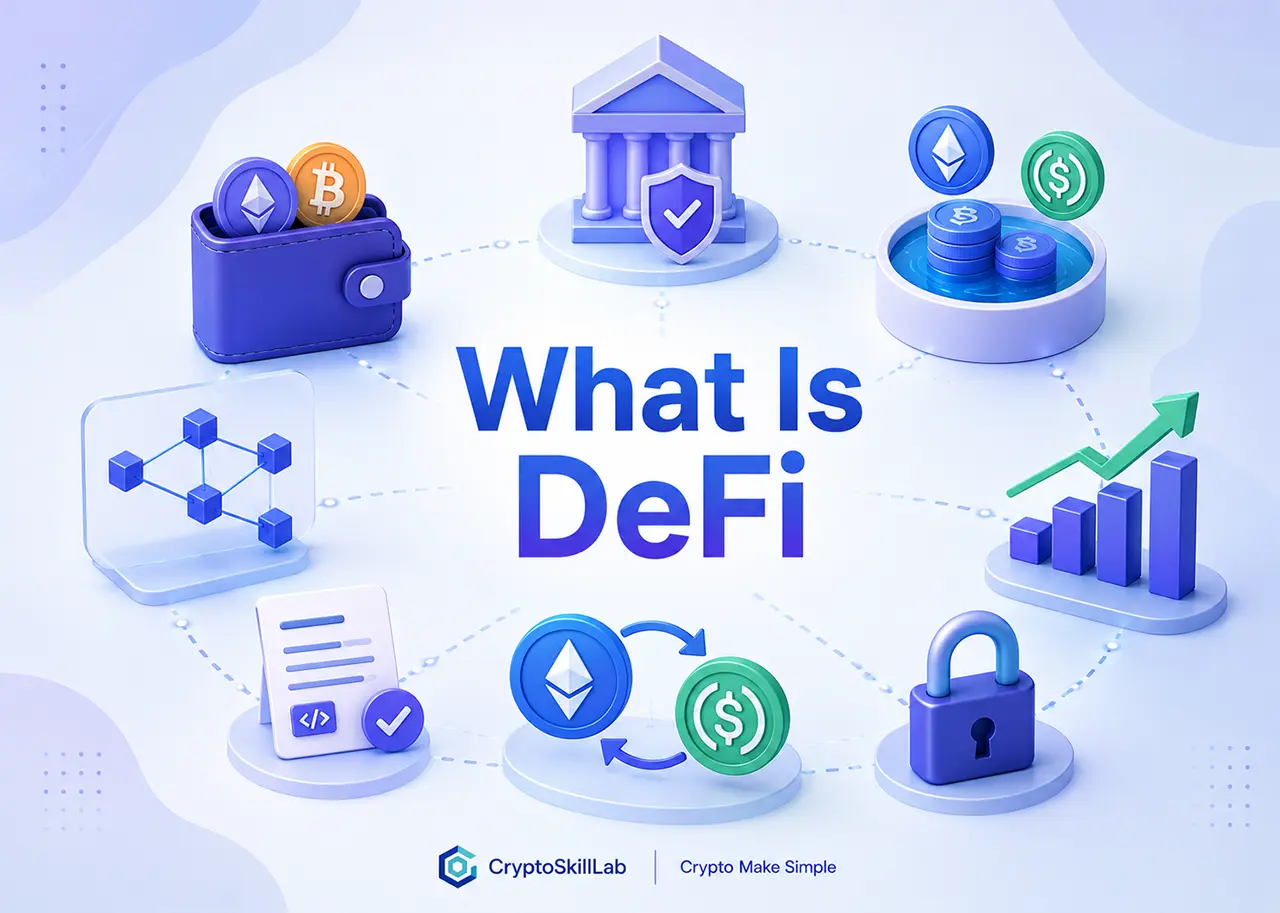
What Is DeFi? A Complete Beginner’s Guide
If you’ve been exploring cryptocurrency, you’ve probably come across the term DeFi. Many beginners wonder what is defi, why people are talking about it, and how it differs from traditional banking. The good news is that you don’t need to be a financial expert or a blockchain developer to understand the basics.
Decentralized Finance, commonly known as DeFi, is a growing ecosystem of financial services built on blockchain technology. Instead of relying on banks or other financial institutions, DeFi allows people to interact directly with digital applications using cryptocurrency wallets. This creates new opportunities for borrowing, lending, trading, and earning rewards without requiring a traditional intermediary.
In this beginner-friendly guide, you’ll learn what is defi, how it works, its advantages and disadvantages, common use cases, and practical steps for getting started safely.
Table of Contents
- What Is DeFi?
- How DeFi Works
- Why Blockchain Makes DeFi Possible
- Popular DeFi Services
- Benefits and Risks
- Examples of DeFi Applications
- How to Start Using DeFi
- Frequently Asked Questions
What Is DeFi?
To understand what is defi, imagine being able to borrow money, exchange currencies, or earn interest without visiting a bank or filling out lengthy paperwork. Instead, software automatically handles these financial services through smart contracts running on a blockchain.
Smart contracts are computer programs that automatically execute transactions when specific conditions are met. Since these rules are written into code, transactions can happen without needing a middleman.
Unlike traditional finance, where banks approve transfers and maintain account balances, DeFi applications allow users to control their own digital wallets while interacting directly with decentralized protocols.
How Does DeFi Work?
Understanding what is defi becomes much easier once you know the basic building blocks that make decentralized finance possible.
1. Blockchain
Every DeFi application runs on a blockchain. The blockchain stores transaction records securely and allows anyone to verify activity without relying on a central authority.
If you’re still learning about blockchain technology, read our guide: What Is Blockchain and How It Works.
2. Cryptocurrency Wallets
Instead of creating a bank account, users connect a cryptocurrency wallet. The wallet stores digital assets and allows interaction with decentralized applications while keeping users in control of their private keys.
3. Smart Contracts
Smart contracts automatically perform financial actions according to programmed rules. For example, they can release a loan after collateral has been deposited or automatically exchange one cryptocurrency for another.
4. Decentralized Applications (dApps)
Users interact with DeFi through decentralized applications, often called dApps. These websites connect directly to smart contracts instead of centralized servers.
How Is DeFi Different From Traditional Banking?
One of the easiest ways to understand what is defi is by comparing it with the banking system most people already know.
- Banks require approval for many financial services.
- DeFi applications usually operate automatically using smart contracts.
- Banks hold your money on your behalf.
- With DeFi, you control your own wallet and private keys.
- Traditional banking operates within business hours.
- Most DeFi platforms operate 24 hours a day.
- Bank transfers may take several days.
- Blockchain transactions are often completed much faster depending on the network.
These differences are one reason decentralized finance has attracted attention from developers, investors, and businesses around the world.
Common DeFi Services
Now that you understand what is defi, let’s look at some popular services available within the decentralized finance ecosystem.
Decentralized Exchanges
Users can trade cryptocurrencies directly with one another without relying on a centralized exchange.
Lending Platforms

Some protocols allow users to lend cryptocurrency and potentially receive rewards, while others allow borrowing against crypto collateral.
Stablecoins
Stablecoins are cryptocurrencies designed to maintain a relatively stable value, making them useful for payments and trading within DeFi.
Liquidity Pools
Liquidity pools combine funds from many users to help decentralized exchanges process trades efficiently.
Before using any decentralized financial service, it’s helpful to understand the basics of cryptocurrency. If you’re new to digital assets, start with our guide: What Is Crypto?
Benefits of DeFi
Now that you understand what is defi, let’s explore why millions of people are interested in decentralized finance. While DeFi is still evolving, it offers several advantages over traditional financial systems in certain situations.
1. Greater Financial Access
Anyone with an internet connection and a compatible cryptocurrency wallet can access many DeFi applications. Unlike traditional banking, users often don’t need lengthy approval processes or extensive paperwork.
2. Full Control of Your Assets
One of the biggest advantages of DeFi is self-custody. Instead of depositing money into a bank account controlled by another organization, you keep control of your own wallet and private keys. This gives you more responsibility, but also greater ownership of your digital assets.
3. Transparency
Most DeFi protocols operate using open-source smart contracts. Transactions are recorded on public blockchains, allowing users to verify activity rather than relying solely on company records.
“DeFi can provide new financial opportunities, but every opportunity comes with responsibility. Always understand how a protocol works before using it.”
4. Global Availability
Traditional banking services are not equally available worldwide. DeFi applications can often be accessed from anywhere, although local laws and regulations may differ depending on your country.
5. Continuous Operation
Unlike banks that close during weekends or holidays, many DeFi applications are available 24 hours a day, seven days a week.
Potential Risks of DeFi
Learning what is defi also means understanding its risks. While decentralized finance offers exciting possibilities, beginners should never assume every platform is safe.
Smart Contract Bugs
A programming mistake inside a smart contract may allow attackers to exploit vulnerabilities. Even audited projects are not completely risk-free.
Scams and Fake Projects
Some websites imitate legitimate DeFi platforms to steal wallet credentials or convince users to send cryptocurrency. Always verify official websites before connecting your wallet.
Market Volatility
The value of cryptocurrencies can change rapidly. Even if a DeFi platform functions correctly, the assets you hold may increase or decrease in value.
User Responsibility
If you lose your wallet’s recovery phrase or private keys, you may permanently lose access to your funds. There is usually no customer support that can restore your wallet.
“DeFi gives users more control over their funds by replacing many traditional financial intermediaries with transparent blockchain-based applications.”
Real-World Examples of DeFi
The easiest way to understand what is defi is through everyday examples.
Example 1: Crypto Trading
Instead of opening an account at a centralized exchange, a user connects a wallet to a decentralized exchange and swaps one cryptocurrency for another directly through smart contracts.
Example 2: Lending
A user deposits cryptocurrency into a lending protocol. Other users can borrow against collateral, while the lender may receive rewards according to the platform’s rules.
Example 3: Stablecoin Payments
Someone sends stablecoins to another person in a different country without waiting for traditional bank processing times.
Example 4: Liquidity Pools
Users contribute cryptocurrency to a shared liquidity pool that helps facilitate trades on decentralized exchanges. In return, participants may receive a share of transaction fees depending on the protocol.
Broad Topics Connected to DeFi
Understanding what is defi becomes easier when you explore related blockchain concepts, including:
- Blockchain technology
- Cryptocurrency wallets
- Bitcoin and Ethereum
- Smart contracts
- Stablecoins
- Decentralized applications (dApps)
- Token swaps
- Web3 technology
- Digital asset security
- Private keys and recovery phrases
If you’re still learning about the world’s first cryptocurrency, our guide What Is Bitcoin? explains how Bitcoin works and why it remains an important part of the crypto ecosystem.
Step-by-Step: How to Start Using DeFi Safely
After learning what is defi, you may be interested in trying a decentralized finance application. The most important rule is to move slowly and never invest more than you can afford to lose. Follow these beginner-friendly steps to get started safely.
Step 1: Learn the Basics
Before connecting your wallet to any DeFi platform, understand how blockchain technology, cryptocurrency wallets, and smart contracts work. A little research now can help you avoid costly mistakes later.
Step 2: Choose a Trusted Wallet
Select a well-known cryptocurrency wallet that supports the blockchain you plan to use. During setup, you’ll receive a recovery phrase. Write it down and store it offline in a secure location. Never share it with anyone.
Step 3: Buy Cryptocurrency
Purchase a small amount of cryptocurrency from a reputable exchange. Beginners should start with an amount they are comfortable learning with rather than making a large investment.
Step 4: Transfer Funds to Your Wallet
Move your cryptocurrency from the exchange to your personal wallet. Always double-check the wallet address before confirming the transaction, as blockchain transfers cannot usually be reversed.
Step 5: Visit the Official DeFi Platform
Only use the project’s official website. Fake websites often copy the appearance of legitimate platforms to trick users into connecting their wallets or signing malicious transactions.
Step 6: Connect Your Wallet
Most DeFi applications include a “Connect Wallet” button. Review every permission request carefully before approving it.
Step 7: Start Small
Try a simple transaction first, such as swapping a small amount of cryptocurrency. This helps you understand how transaction fees, confirmations, and wallet approvals work without taking unnecessary risks.
Step 8: Monitor Your Transactions
Keep track of your wallet activity and review every completed transaction. Monitoring your account regularly helps you identify unexpected activity early.
Best Practices for Staying Safe
Understanding what is defi also means knowing how to protect yourself. Good security habits are just as important as understanding the technology.
- Never share your recovery phrase or private keys.
- Bookmark official websites instead of clicking random links.
- Enable two-factor authentication on exchange accounts.
- Research every DeFi project before using it.
- Read documentation and community announcements.
- Be cautious of promises of guaranteed profits.
- Keep your wallet software updated.
- Consider using a hardware wallet for larger holdings.
Common Beginner Mistakes
Many people learning what is defi make similar mistakes. Knowing them in advance can save both time and money.
Investing Too Much Too Soon
New users sometimes deposit large amounts before fully understanding how a protocol works. Learning with smaller amounts reduces unnecessary risk.
Ignoring Network Fees
Every blockchain has transaction fees. Beginners should check estimated fees before approving transactions, especially during periods of high network activity.
Using Unknown Platforms
Not every DeFi project is trustworthy. Look for projects with established communities, transparent documentation, and a history of reliable operation.
Approving Every Wallet Request
Some malicious websites ask users to approve unnecessary permissions. Always read wallet prompts carefully before signing any transaction.
Failing to Back Up Wallet Information
Without a properly stored recovery phrase, losing access to your device could mean permanently losing access to your cryptocurrency.
Is DeFi Right for Beginners?
The answer depends on your willingness to learn. Understanding what is defi takes time, but beginners who start slowly and prioritize security can gain valuable experience with decentralized finance.
Rather than trying every new protocol, focus on learning one concept at a time. Understand how wallets work, learn how blockchain transactions are confirmed, and become comfortable managing your own digital assets before exploring more advanced DeFi services.
Remember that DeFi is a technology, not a guaranteed way to make money. Its primary purpose is to provide decentralized financial services using blockchain technology while giving users greater control over their assets.
Frequently Asked Questions
What is DeFi in simple terms?
DeFi, short for decentralized finance, is a collection of blockchain-based financial applications that allow people to borrow, lend, trade, and manage digital assets without relying on traditional banks.
Is DeFi safe?
DeFi can be safe when using reputable platforms and following good security practices. However, users should be aware of risks such as smart contract vulnerabilities, phishing websites, and market volatility.
Do I need Bitcoin to use DeFi?
Not always. Many DeFi applications are built on blockchain networks that support smart contracts, and they may use different cryptocurrencies depending on the platform.
Can beginners use DeFi?
Yes. Beginners can start by learning the basics, choosing a trusted wallet, and experimenting with small amounts while taking time to understand how each platform works.
Why is DeFi becoming popular?
Many people appreciate DeFi because it offers greater accessibility, transparency, and direct control over digital assets. As blockchain technology continues to evolve, decentralized financial services are becoming more widely available.
Key Takeaways
- DeFi stands for decentralized finance.
- It uses blockchain technology and smart contracts instead of traditional financial intermediaries.
- Users remain in control of their own cryptocurrency wallets.
- Common DeFi services include trading, lending, borrowing, and liquidity pools.
- Learning security best practices is essential before using any DeFi platform.
- Always research projects carefully and start with small transactions.
Learn More About DeFi
If you’d like to explore decentralized finance further, these trusted resources provide beginner-friendly explanations and official documentation:
Conclusion
Understanding what is defi is an excellent first step toward learning how modern blockchain technology is changing financial services. Instead of relying entirely on banks or other centralized institutions, DeFi allows users to interact directly with blockchain-based applications using smart contracts and cryptocurrency wallets.
While decentralized finance offers exciting opportunities, it also comes with responsibilities. Taking time to understand wallets, private keys, transaction fees, and security best practices will help you avoid common mistakes and make more informed decisions.
Whether your goal is simply to learn about blockchain or eventually explore decentralized applications, building a strong foundation is the best approach. Start with the basics, continue learning, and remember that informed users are better prepared to navigate the rapidly evolving world of cryptocurrency and decentralized finance.